Ferrara city of the 20th century
From Ecletism to Rationalism
Transport methods
20 years of fascist regime profoundly influenced the development of architecture and urbanism in Italy. In Ferrara, the area between the Monumental Acqueduct and Largo Antonioni hosts several buildings which tell this story.
The itinerary starts from the 20th century Quadrilateral (Largo Antonioni), the main example of rationalist intervention. The four important buildings that overlook the square Largo Antonioni, together with Previati, De Pisis, Boldini and Mentessi streets which were part of the same urban planning project, contribute in defining its perimeter.
As customary in rationalist school of architecture, the complex was coinceived to concentrate the buildings devoted to the main socio-cultural missions of fascist regime, for the benefit of the citizens of Ferrara: music in the Girolamo Frescobaldi Conservatory and Auditorium, science in the former Institue of Natural History, now Natural History Museum, school in the Umberto I School, then renemed to Alda Costa, and leisure in the former meeting and cultural space of the Dopolavoro Provinciale Fascista – Fascist Provincial Recreational Association, currently the Boldini complex.
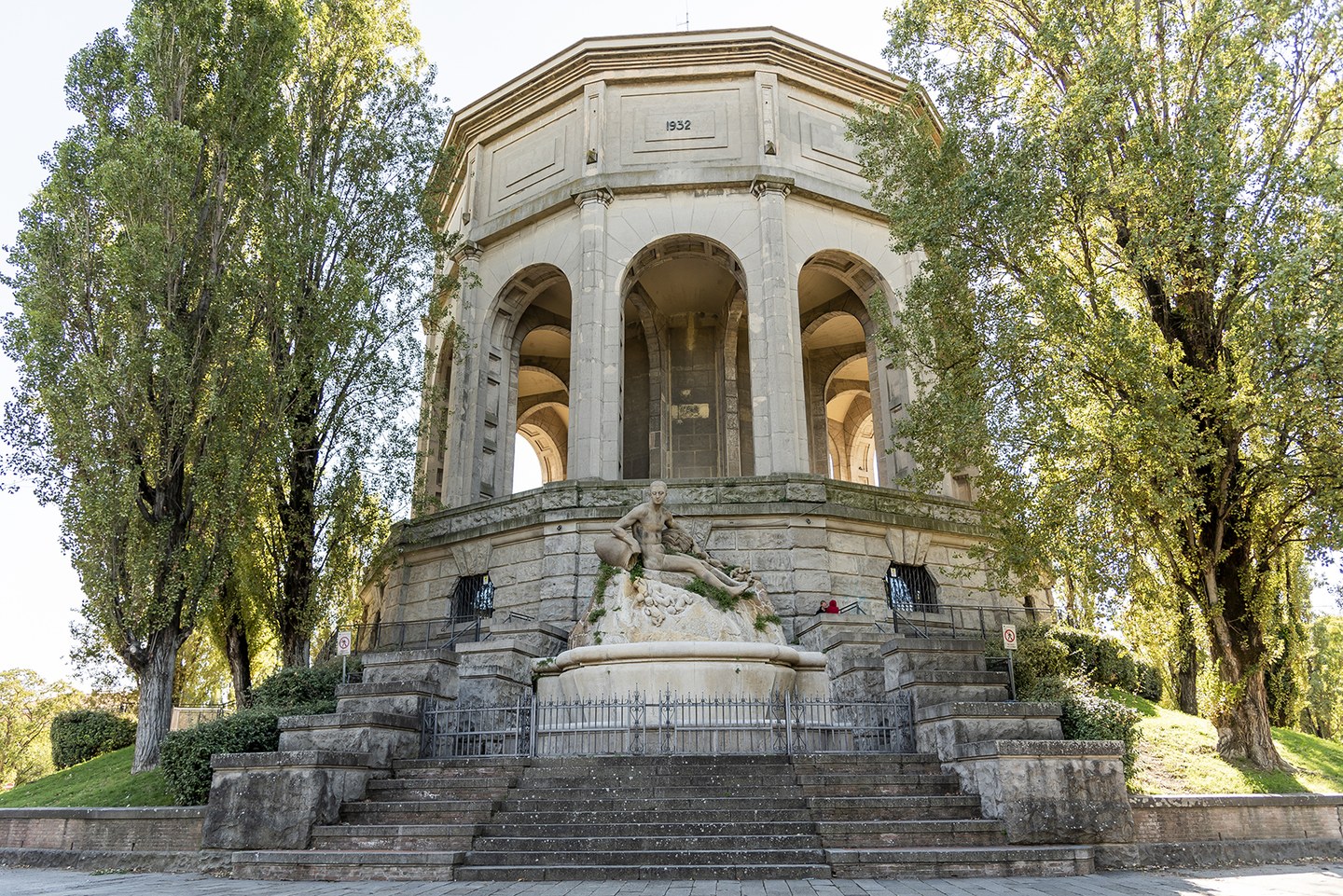
The itinerary ends in the square which hosts the majestic acqueduct, originally called Square XXVIII October to celebrate the march on Rome organised by the National Fascist Party in 1922.
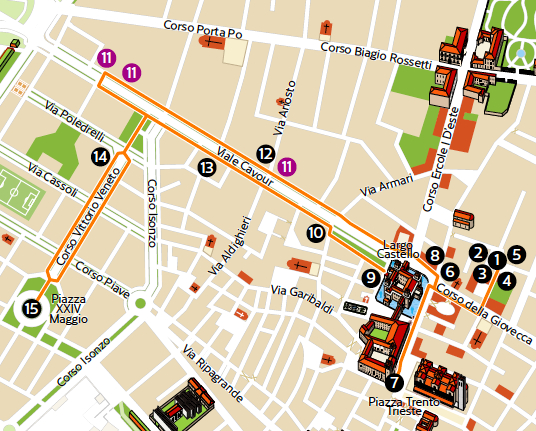
THE ITINERARY IN BRIEF
Quadrivio di Via Boldini, De Pisis, Mentessi e Previati (1), complesso Boldini (2), Conservatorio di musica "G. Frescobaldi" (3), Museo di Storia Naturale (4), scuola primaria statale "A. Costa" (5), palazzo delle Assicurazioni Generali (6), Torre della Vittoria (7), Camera di Commercio (8), Ex Palazzo Ina (9), palazzo delle Poste (10), ville liberty di Ciro Contini (11), palazzo dell'Aeronautica (12), ex casa del Fascio (13), scuola primaria statale "M. Poledrelli" (14), Acquedotto monumetale (15).