
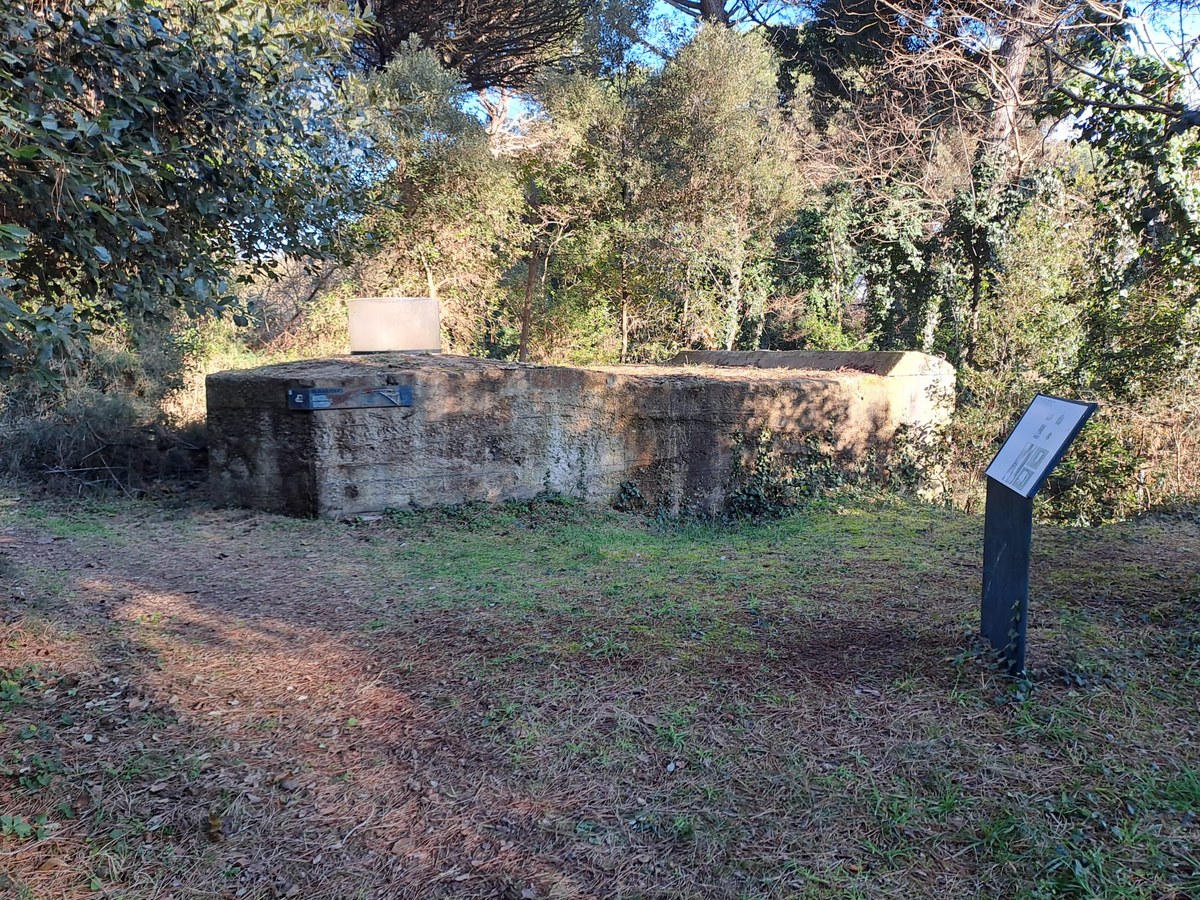
Ringstand VF 31 bunkers were small structures designed for close-range defense and characterized by a highly specialized function. The construction solutions adopted suggest that these bunkers were almost certainly intended for the installation of a flamethrower, a weapon used for short-range defense.
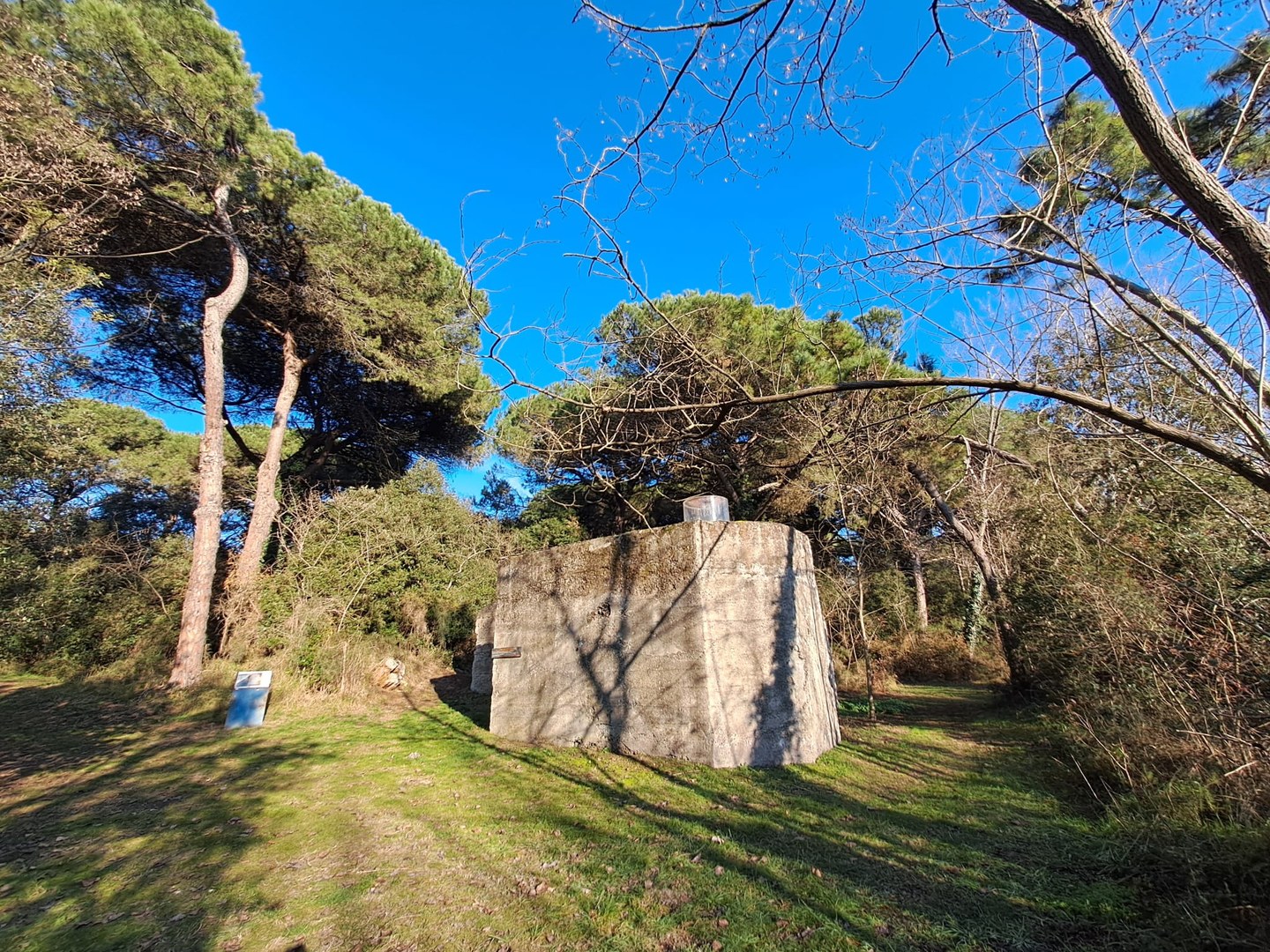
Bunkmemo, on the trail of the Genghis Khan defensive line
Starting from
Mesola
Tour length
6 km
Duration
2 h
Transport methods
The Bunkmemo route begins in Mesola on Via delle Rimembranze, near the cemetery. From here, it winds through the Pineta del Fondo pine forest, which can be explored on foot or by bicycle, designed for slow and mindful enjoyment.
The bunkers in the Pineta del Fondo and Pineta della Motte pine forests are part of a defensive system built between 1943 and 1944 by the German armed forces along the defense line known as Genghis Khan. It was a military barrier built to counter a possible allied landing along the Adriatic coast and to control the strategic transport routes in the area.
The structures, made of reinforced concrete and camouflaged in the wooded landscape, were connected to each other and integrated with the existing road network, exploiting the natural characteristics of the territory as a defensive element. After World War II, many bunkers were gradually abandoned and, in some cases, used as temporary shelters.
Today, these structures are protected and promoted through the Bunkmemo project, which returns them to the community as historical testimonies set in a natural environment of great value. Some bunkers can also be visited inside, allowing visitors to gain a closer understanding of the conditions, spaces, and functions of these military structures, which have been transformed into elements of an open-air museum and a memorial park.
The bunkers
These reinforced concrete structures were designed as barricades to hinder any advance by the Allies along the Via Romea and in the wetlands of the Delta, exploiting the natural landscape as a strategic element.
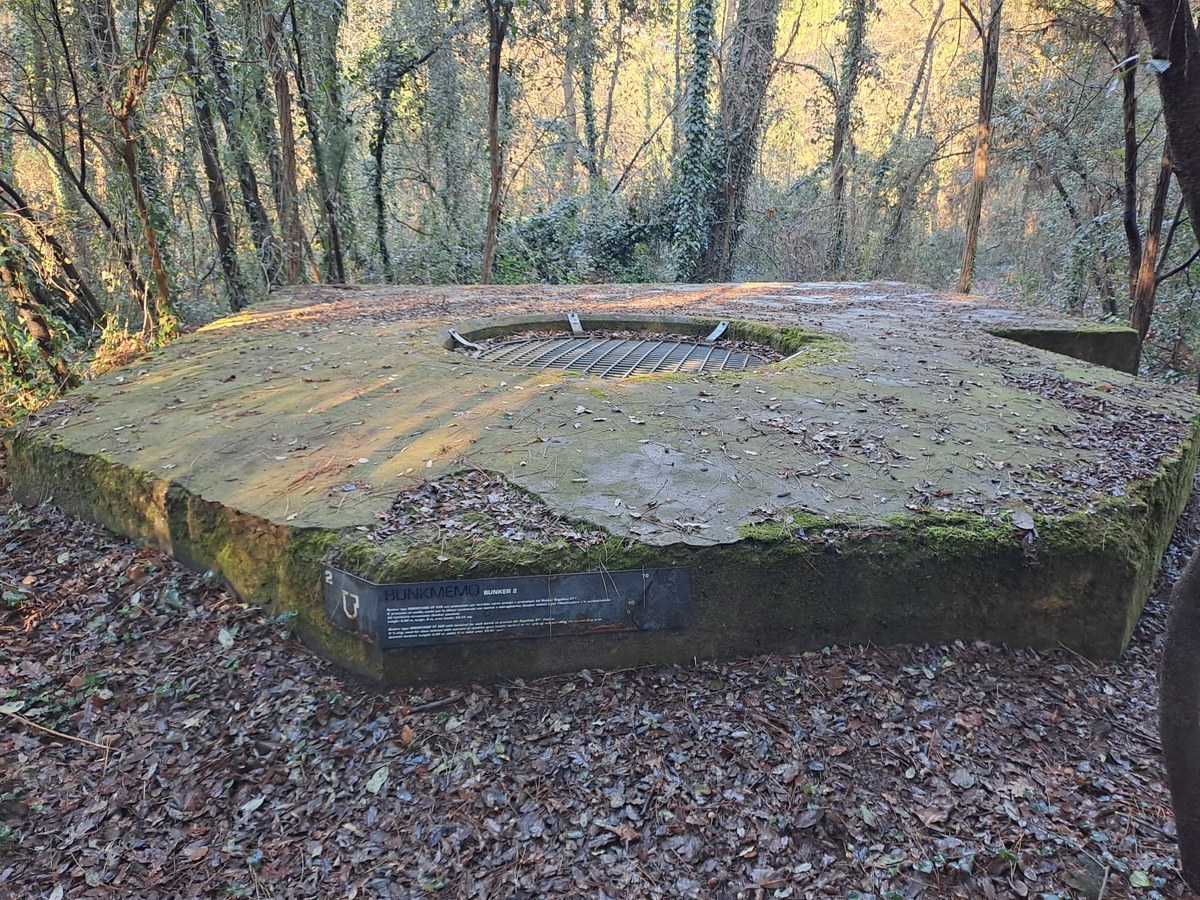
Step 1
Bunker Regelbau 668
Regelbau 668 bunkers, equipped with a Ringstand position, allowed for close-range defense with both machine guns and traditional mortars. These structures were mainly active, but were also used as passive bunkers for observation purposes.