Palazzina Marfisa D'Este
Timetable
9.30-13.00 | 15.00-18.00.
Ticket office closes at 17.30. Closed on Monday.
Closed December 25th.
Special openings 2025
- Monday 8th December 2025
- Monday 29th December 2025
Prices
- Full price: 6 €
- Reduced: 3 €
- Groups: 3 €
- Free:
-Up to age 18
- Tourist guides
- Disabled persons with one accompanying person
- MyFe card holders
- Visitors on their birthday.
Discover MyFE Card
Accessible to people with disabilities.
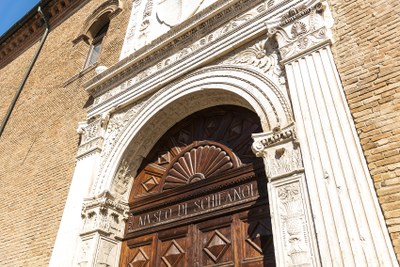
The Villa is a splendid example of a 16th-century high-class residence and was once surrounded by magnificent gardens that connected it to other buildings known as Casini di San Silvestro.
It was built by Francesco d'Este, son of Duke Alfonso I and Lucrezia Borgia, as a summer residence in which to spend his leisure time, thus reviving the tradition of court “delizie”. Upon his death, the building was inherited by his daughter, Princess Marfisa d'Este, after whom it was named and who lived there until her death, refusing to leave Ferrara even after the city was devolved to the Papal States, when her family moved to Modena.
When Marfisa died in 1608, the Palazzina was inherited by the Cybo Malaspina family.
It then underwent a series of changes of ownership until it was furnished and inaugurated as a museum in 1935.
The façade of the building on Corso Giovecca is made of exposed brick and punctuated by large rectangular windows. The large garden at the rear is embellished by a loggia known as the “degli aranci” (orange trees), once used as a theatre and, in winter, as a cedrara for sheltering delicate plants and citrus fruits.
The new layout, the result of careful restoration work, respects the historical stratification of the building and the traces left by 20th-century transformations, in particular those promoted by Nino Barbantini, a leading figure in the museumisation of the Palazzina in the 1930s.
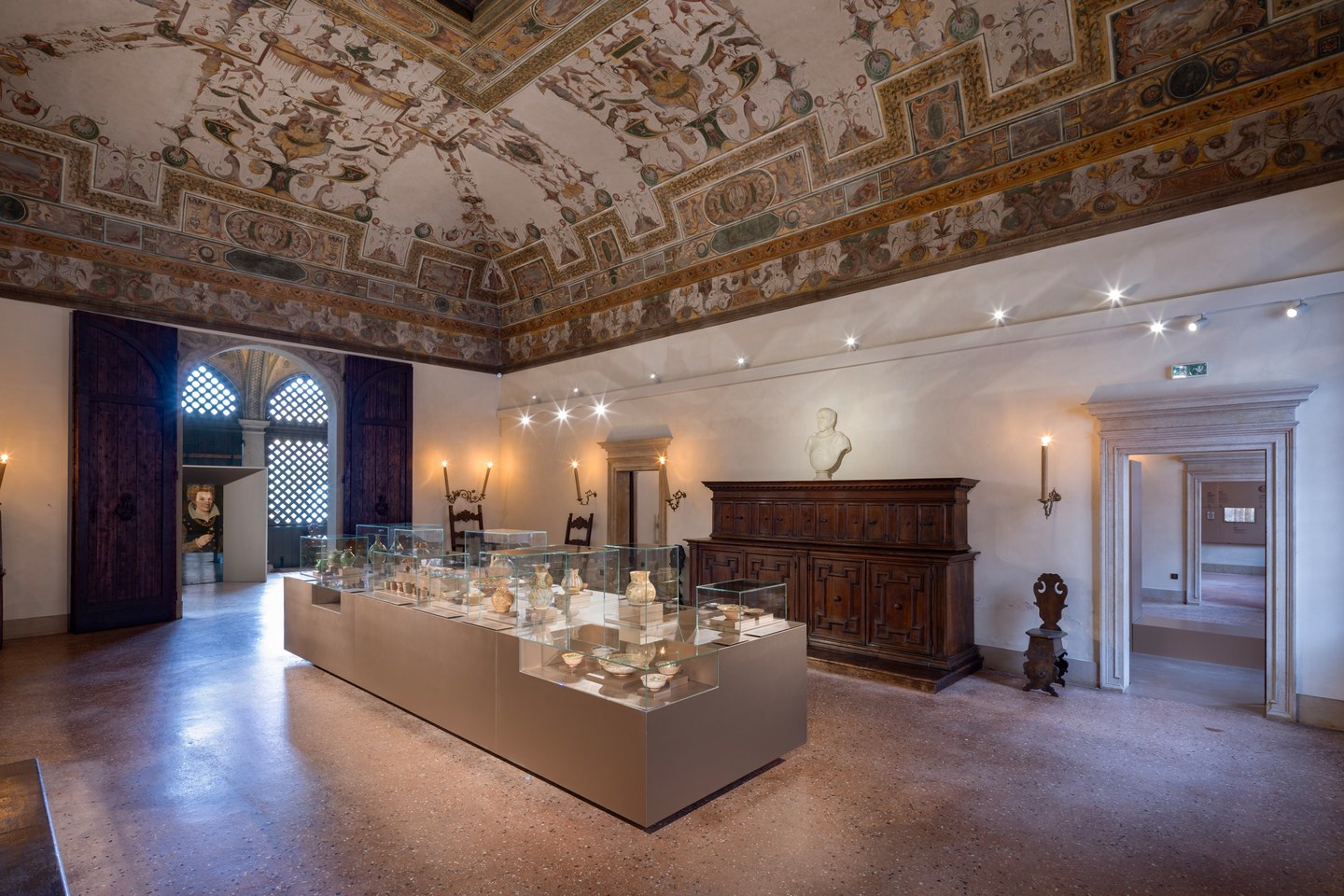
The museum itinerary offers the public new content with a particular focus on accessibility and understanding of the rich heritage on display. The museum's reorganisation also enhances the civic collections, creating an itinerary that will accompany visitors on a journey of discovery through paintings, furnishings, ceramics and period objects, in a harmonious dialogue between Barbantini's original design and new exhibition displays.
The result is an evocative and engaging itinerary that tells the story of the building and its evolution over time, enhancing the historical collection in dialogue, for the first time, with additional objects from the numismatic and ceramic collections of both the Museums of Ancient Art and the Estense Foundation.
Reservations are recommended and free of charge: PRENOTA ORA
Small dogs are allowed if they can be held in their owner's arms or in a carrier
Itineraries related to this point of interest