Delizia Estense del Belriguardo
Timetable
Thursday, Friday, Saturday, Sunday 9.30 am-12 pm/3.30 pm-7 pm
Visits are possible during the opening hours of the Archaeological Museum.
Prices
Full price: € 5,00
Reduced: € 2,00
(people with disabilities, school groups, students, minors, teachers and journalists).
Free for the citizens of Voghiera.
Dogs are allowed.
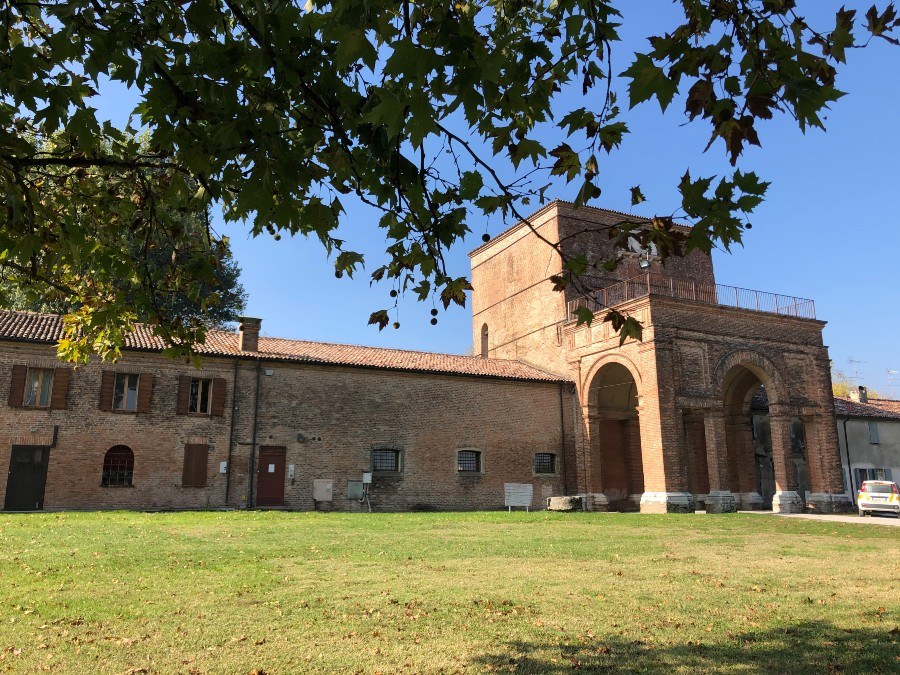
Built in 1435 by Niccolò d'Este, the Delizia del Belriguardo was the first to be built outside the walls of Ferrara and it was always one of the largest and most sumptuous stately homes of the Renaissance period. Today it houses the Civic Museum of Belriguardo.
The Este family's summer estate of Belriguardo was dubbed "The Versailles of the Estensi". The entire Este court would move here for about six months and rule the duchy from Belriguardo.
The castle of Belriguardo was built around two courts. In front of the majestic entrance tower, after the first main courtyard, there was the so-called alta corte, the prince's residence. It was built on two floors (today it is only half its original height) with porticos everywhere. The walls were painted and in the back of the palace there were endless gardens with watercourses, fountains, bridges, exotic plants and hedge mazes.
The great gardens of Belriguardo spread over 30 hectars of land and are documented in detail on a 17th century map. They were actual water and land oasis in which it was easy to get lost and lose track of time and space.
When the Este family had to leave because of the arrival of the Papal State, the big rooms of the palace were made into barns and silos and the porticos' elegant columns became squared and rustic. The farmers and their families moved into the building, making it a sort of apartment complex.
Now a wing of the palace homes the Civic Museum of Belriguardo, which has finds from the Necropolis of Voghenza.
Archaeological Section
The Archaeological Section of the Museum is located in the central body of the palace, under the Salone delle Bifore; the collection has been recently expanded thanks to the finds of Fondo Tesoro, area in which the ancient roman centre of Voghenza has been found. These finds show the everyday life and funeral rituals of the time.
Renaissance Section
Modern Art Section